AI Content Authority Strategy: Dominating the 2026 Semantic Web
In the 2026 search landscape, individual pages no longer rank in a vacuum. Google's algorithm (and the conversational LLMs like Gemini and ChatGPT that increasingly drive search traffic) look for Topical Sufficiency. If you want to rank for "Local Business Websites," you cannot just write a single page about it; you must demonstrate authority across the entire ecosystem—from server-side security to conversion psychology.
The Semantic Moat
A "Semantic Moat" is a defensive SEO strategy where you build such a dense, comprehensive cluster of high-quality content around your core service that competitors cannot algorithmically outrank you without expending massive resources. By meticulously answering every possible permutation of a user's intent, you signal to search engines that your domain is the ultimate authority on the subject.
The Triple-Layer Silo Architecture
We don't just "write blogs." We engineer interconnected content systems. Our AI-driven approach utilizes a specialized three-layer structure that captures high-intent traffic and distributes ranking authority efficiently across your entire domain.
- 01. Cornerstone Pillars: High-level, 3000+ word definitive guides that define your primary service category. These act as the gravitational center of your content cluster.
- 02. Support Nodes: Dense, technical pages that solve specific problems. These include checklists, FAQs, debugging workflows, and pricing guides that target long-tail, high-intent queries.
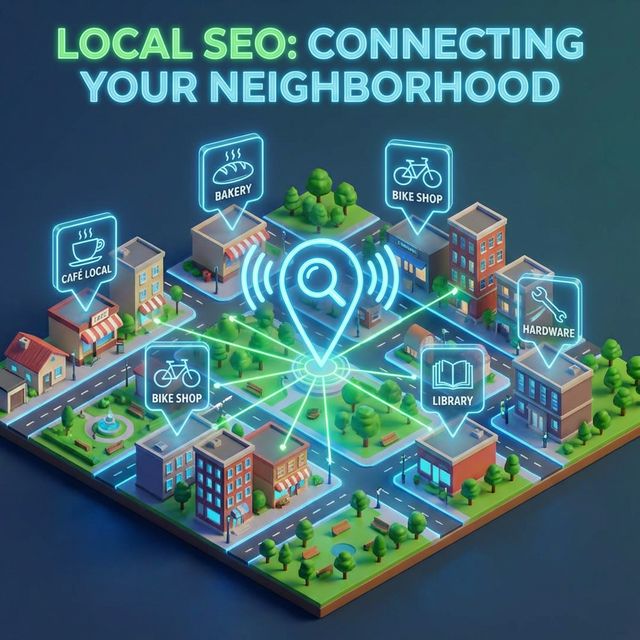
- 03. Local Mesh: Hyper-local landing pages that connect your technical expertise to specific geographic service areas (e.g., "Plumbing Troubleshooting in Lancaster, CA").
Why Multi-Agent AI Automation is Mandatory
Building 100+ pages of high-authority, technically accurate content manually would take a legacy marketing agency 6 to 9 months. By the time they finish, search algorithms and market conditions have already shifted. Furthermore, the cost of human-generated content at this scale is prohibitive for most small to medium-sized businesses.

Our AI Pilot Workflows allow us to map, draft, technically audit, and deploy entire authority clusters over a single weekend. This provides a massive speed-to-market advantage. However, relying on a single AI prompt to generate this much content is a recipe for disaster. We utilize a multi-agent orchestrated approach.
- The Research Agent: This autonomous script scrapes the live Google SERPs for your target keywords. It identifies exactly what headings, topics, and questions the current top-ranking pages are using, creating a mathematical blueprint for success.
- The Drafting Agent: Utilizing advanced fine-tuned models, this agent writes the initial technical copy. It is strictly constrained by a prompt structure that forbids generic filler and demands high semantic density.
- The Auditor Agent: This is the most crucial component. Before any content is published, a separate LLM reviews the draft against Google's Helpful Content guidelines. If it detects "fluff" or factual inconsistencies, the draft is rejected and sent back to the Drafting Agent for a rewrite.
Bridging the Gap: Programmatic SEO vs. Traditional Marketing
Traditional content marketing operates on hope: you write a blog post, share it on Facebook, and hope someone reads it. Our AI Authority Content Strategy operates on mathematics. This is fundamentally Programmatic SEO.
Programmatic SEO involves creating large-scale landing pages designed specifically for long-tail search queries. Instead of writing one broad page about "Roofing," we programmatically generate 50 highly specific pages such as "Cost of Asphalt Shingle Replacement in Quartz Hill" and "Emergency Leak Repair in Palmdale."
Because these queries are hyper-specific, they have extremely low competition but incredibly high purchase intent. The person searching for "Emergency Leak Repair in Palmdale" doesn't want to read a generic blog about the history of roofing; they want to hire someone immediately. Our AI workflows capture these micro-moments at scale, effectively carpeting your local service area with lead-generation traps.
The Integrity Lock and Data Verification
Every static page deployed in our architecture is hardened against tampering. Because we use a modern JAMstack approach (Javascript, APIs, and Markdown deployed as static HTML), there is no database for hackers to inject spam into. Your authority is not just algorithmically built; it's cryptographically defended at the edge.
Frequently Asked Questions
Can AI really write technical content accurately?
Yes, but it requires sophisticated orchestration. We don't use zero-shot prompts. We use fine-tuned LLMs armed with retrieval-augmented generation (RAG), feeding the models verified technical documentation and your brand guidelines before they write a single word.
How does this strategy handle algorithm updates?
Algorithm updates typically penalize thin, manipulative content. By focusing on creating deep, comprehensive, and highly structured semantic clusters that genuinely answer user intent, this strategy is naturally resilient against core updates.

Written by Brian Smith
Lead Digital Architect, AI Pilots
This foundational guide to AI Content Authority Strategy was authored by Brian Smith. With a deep background in advanced technical SEO and autonomous agent orchestration, Brian designs the semantic architectures that allow AI Pilots' clients to aggressively capture market share. The Triple-Layer Silo framework detailed here is the exact methodology deployed across dozens of successful local and national campaigns, ensuring content is not only rapidly produced but structurally optimized to dominate modern search engines.